
Payment Orchestration vs Payment Gateway: Key Differences
Payment orchestration or payment gateway — these two concepts are often confused, but their responsibilities and the value they deliver are fundamenta...
Read More →Payment orchestration is the technology layer that enables centralized management of multiple banks and payment service providers through a single platform. With smart routing, cascading, and centralized reporting, it increases payment success rates and reduces integration costs. We explain everything in this comprehensive guide.
As your e-commerce platform or application grows, so does the complexity of your payment infrastructure. A single bank's virtual POS is sufficient at first, but over time you'll need multiple bank integrations, different payment methods, international cards, installment campaigns, and backup systems. Managing each one separately creates a significant burden in terms of both developer capacity and operational bandwidth. This is where payment orchestration comes in — bringing all of this complexity under one roof.
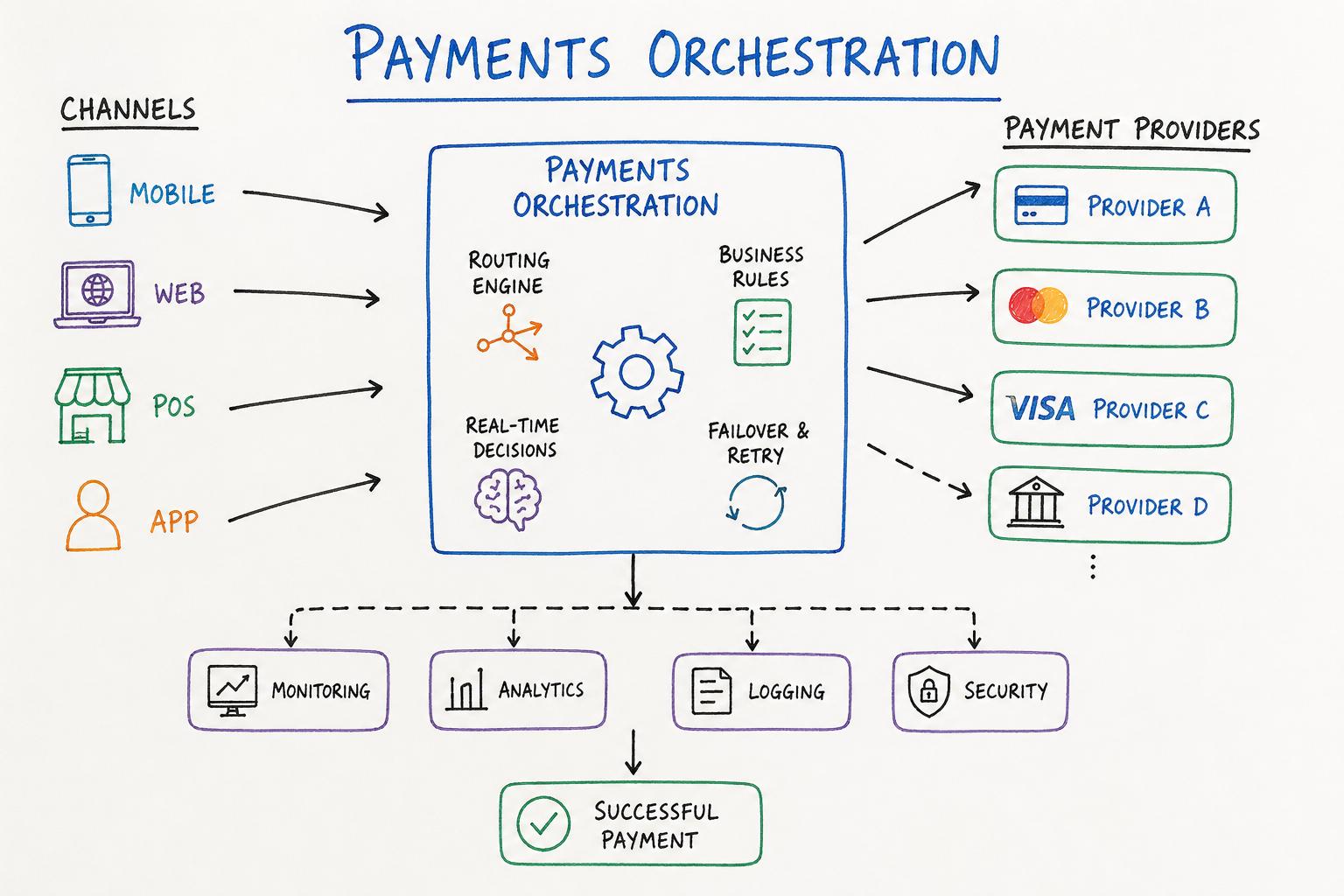
Payment orchestration is the technology layer that enables centralized management of multiple payment service providers (PSPs), banking infrastructures, and payment methods through a single platform. The name comes from classical music orchestration — just as a conductor coordinates different instruments in harmony, payment orchestration coordinates different payment infrastructures together.
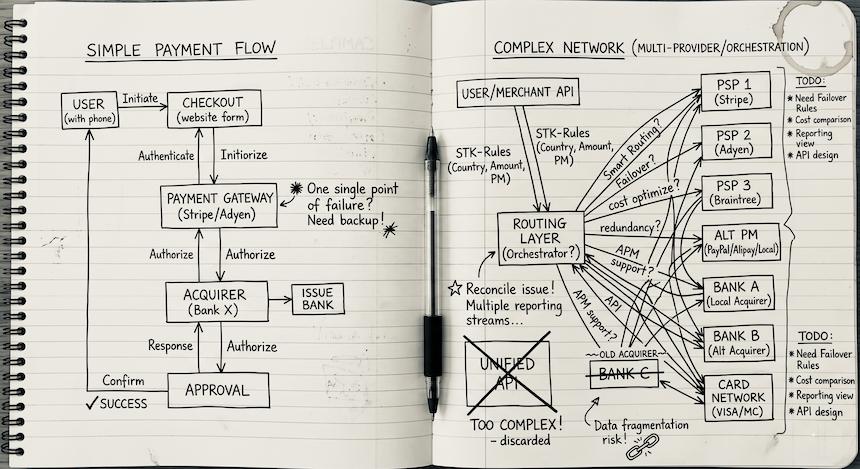
Technically, a payment orchestration platform sits between the merchant and its banks/PSPs. It intelligently determines where each incoming transaction should be routed, automatically moves failed transactions to alternative channels, and manages all of this through a single API.
When a customer presses the payment button at checkout, a complex decision-making process takes place in the background within 1-3 seconds:
Smart routing is the heart of a payment orchestration platform. For each transaction, it answers the question: 'Which bank or PSP will deliver the best result?' Routing decisions can be made with static rules (by card bank, by amount) or dynamically (based on historical success rates, real-time performance data).
For example: a transaction made with a Garanti Bank card is routed to Garanti's virtual POS, maximizing the on-us transaction advantage. This ensures installment campaigns are applied at the right bank and approval rates increase accordingly.
Cascading is the automatic rerouting of a transaction to the next provider when a payment channel fails. In cases of bank-side technical errors, daily limit overruns, or temporary service outages, the payment is completed without the customer noticing anything.
Research shows that 20-30% of failed transactions can be completed on a second attempt. Without a cascading mechanism, this revenue is permanently lost.
Modern payment orchestration platforms include card tokenization natively. The customer's card details are tokenized by the platform; this means that even when switching between different PSPs, the customer doesn't need to re-enter their card. The same token can be used across multiple providers, and PCI DSS scope is significantly reduced.
Working with dozens of banks and PSPs separately creates significant operational overhead. A payment orchestration platform presents all transaction data on a single screen: channel-based success rates, transaction costs, decline reason distributions, and real-time reconciliation. Hours of manual work for finance and operations teams are automated.
These two concepts are often confused, but there is a fundamental difference:
Simply put: a payment gateway is a single connection; payment orchestration is the intelligent manager of the connection network.
Payment orchestration creates value for businesses of all sizes, but the need becomes especially critical in the following situations:
Treps is a domestic payment orchestration platform integrated with all major banks in Turkey. Without changing your existing payment infrastructure, you can connect to Treps through a single API integration to gain multi-bank management, smart routing, cascading, and centralized reporting capabilities.
Explore Treps solutions and contact our team to build the right payment architecture for your business.
Payment orchestration is no longer a luxury in the world of payment systems — it is a strategic necessity for growing businesses. A payment infrastructure that starts with a single bank eventually reaches unmanageable complexity; an orchestration platform simplifies this complexity, positively impacting both customer experience and business revenue.
To understand the payment systems ecosystem more deeply, continue exploring our blog series: What is a Payment Gateway, Alternative Payment Methods (APM), and Card Tokenization are natural continuations of this guide.
For virtual POS, payment orchestration and integration needs, let our expert team guide you to the best solution.
Payment orchestration or payment gateway — these two concepts are often confused, but their responsibilities and the value they deliver are fundamenta...
Read More →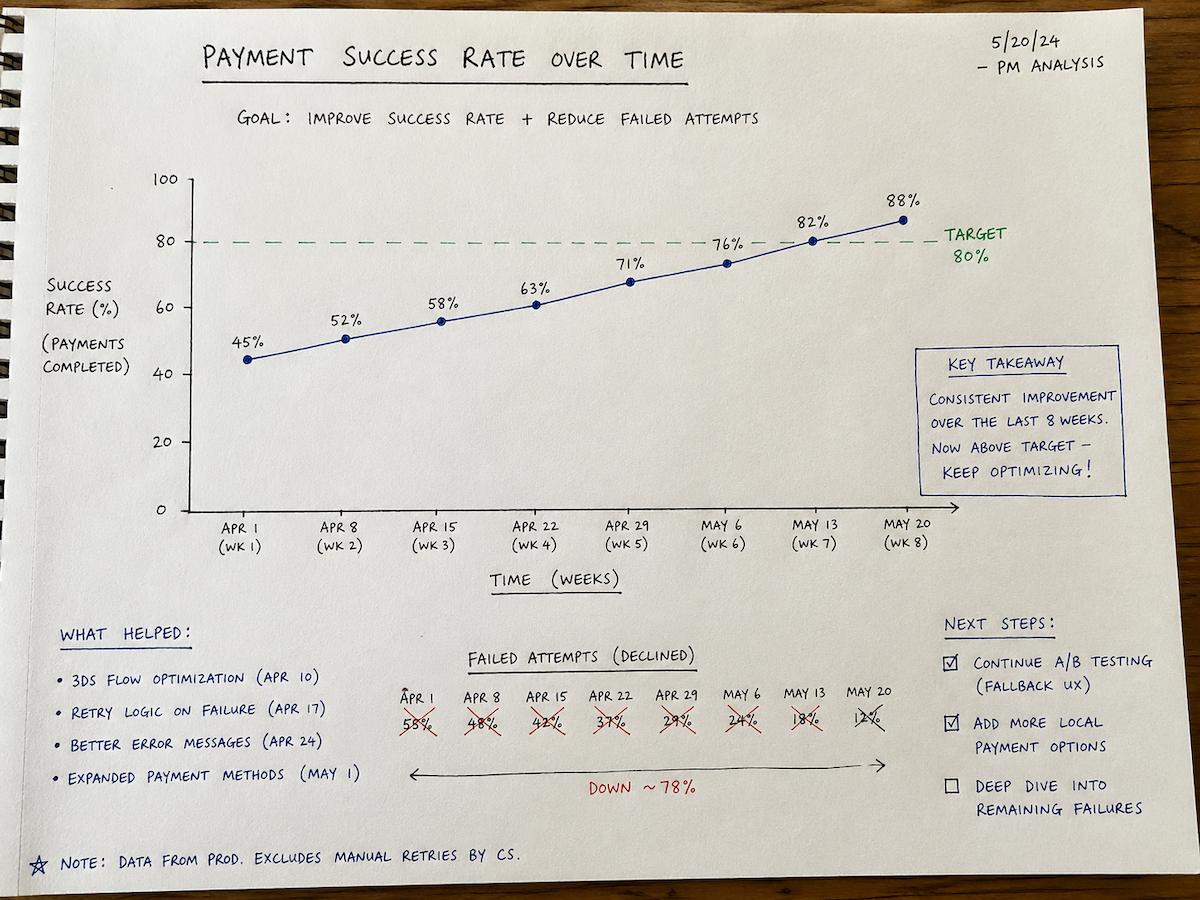
Payment approval rate is one of the metrics with the most direct impact on a business's revenue. Even a 1% increase can mean millions in additional re...
Read More →
Payment gateway, PSP or payment orchestration — what does your business actually need? A complete guide to payment infrastructure concepts and Turkey'...
Read More →