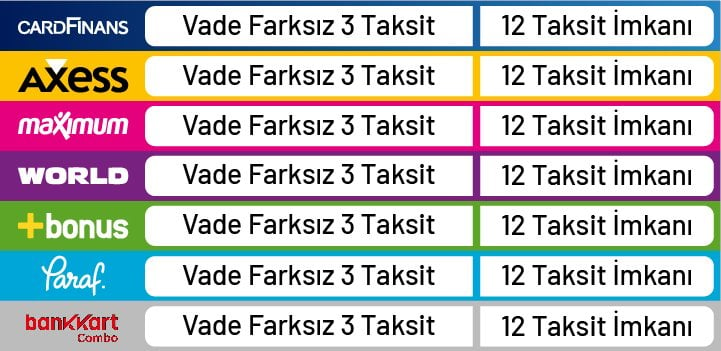
Turkey has one of the most deeply embedded installment payment cultures in the world. Splitting a purchase across multiple months — known as taksit in Turkish — is not a fringe behaviour; it is the default expectation of many consumers, especially on higher-value purchases. For any merchant operating in Turkey, offering installment options is effectively a baseline requirement. Yet the underlying infrastructure is far more complex than it appears on the surface.
How Installment Payments Work in Turkey
When a customer selects an installment option at checkout, the following takes place: the customer chooses the number of installments at the payment screen. The acquirer bank (the bank with which the merchant holds a virtual POS agreement) processes the installment plan and pays the merchant the full amount upfront. The cardholder then repays the debt in monthly instalments to their issuer bank (the card-issuing bank). When a zero-interest installment campaign is offered, the financing cost is covered by the bank's campaign budget — or passed through to the merchant as a higher discount rate.
Important: installment payments apply only to credit cards. Debit cards and prepaid cards are generally excluded.
BDDK Installment Restrictions
Turkey's Banking Regulation and Supervision Agency (BDDK) restricts or outright bans installment payments in certain spending categories. Restrictions are applied at the MCC (Merchant Category Code) level.
Categories where installments are prohibited: fuel stations, supermarkets and grocery retailers, jewellery and gold, foreign currency transactions.
Restricted categories (maximum installment count applies): consumer durables (white goods, furniture), electronics, textiles and apparel. These limits are updated periodically through BDDK decisions — always verify current limits against official BDDK announcements.
Why the MCC Code Matters
The MCC (Merchant Category Code) is the four-digit code that classifies a merchant's business type. The acquirer bank evaluates installment eligibility at the MCC level first: if the MCC falls under a BDDK-restricted category, the installment request is declined regardless of card type or transaction amount. Being registered under the correct MCC is therefore critical at the merchant application stage — an incorrect MCC can block all installment transactions.
The On-Us Advantage: Foundation of Installment Routing
The most technically critical aspect of installment management is the on-us transaction principle. A transaction is considered on-us when the cardholder's issuer bank and the merchant's acquirer bank are the same institution. For example, a Garanti card holder paying through a Garanti virtual POS completes an on-us transaction.
This matters enormously for installments: banks offer their campaign benefits — zero-interest installments, bonus points, miles accruals — primarily through their own virtual POS infrastructure. Routing an Akbank cardholder's payment to Akbank's virtual POS maximises the installment options and campaign eligibility available to that customer. Routing the same card to a different bank's POS means Akbank's card-specific campaigns cannot be applied. Smart payment routing therefore directly impacts installment conversion rates.
Campaign Management: The Hidden Operational Burden
Turkish banks update their installment campaigns periodically. Campaigns can be scoped to specific MCC categories, card product tiers (Gold, Platinum, Travel, etc.) or transaction value ranges. For an e-commerce platform working with five to ten banks, tracking each bank's campaign calendar, scope list, and expiry date separately is a significant operational burden. A missed campaign means an installment option not shown to the customer — and a direct conversion loss.
The Limits of Single-Bank Integration
A merchant operating with a single virtual POS can optimally serve only that bank's cardholders and campaigns. Offering other banks' installment campaigns to their cardholders requires additional integrations. Five bank integrations means five separate technical integrations, five reconciliation flows, and five separate bank portals. This complexity is a technical burden that most merchants cannot manage in-house.
Installment Payments in the Payment Facilitator Model
When integrating through a Payment Facilitator (PF) such as iyzico, PayTR, or Paratika, installment conditions are limited to the banks and campaign portfolio that the PF has contracted. The merchant cannot independently negotiate installment agreements with individual banks. While this model offers fast onboarding, it creates installment flexibility constraints as the business scales — a trade-off worth understanding before committing to the model.
Payment Orchestration and Installment Management
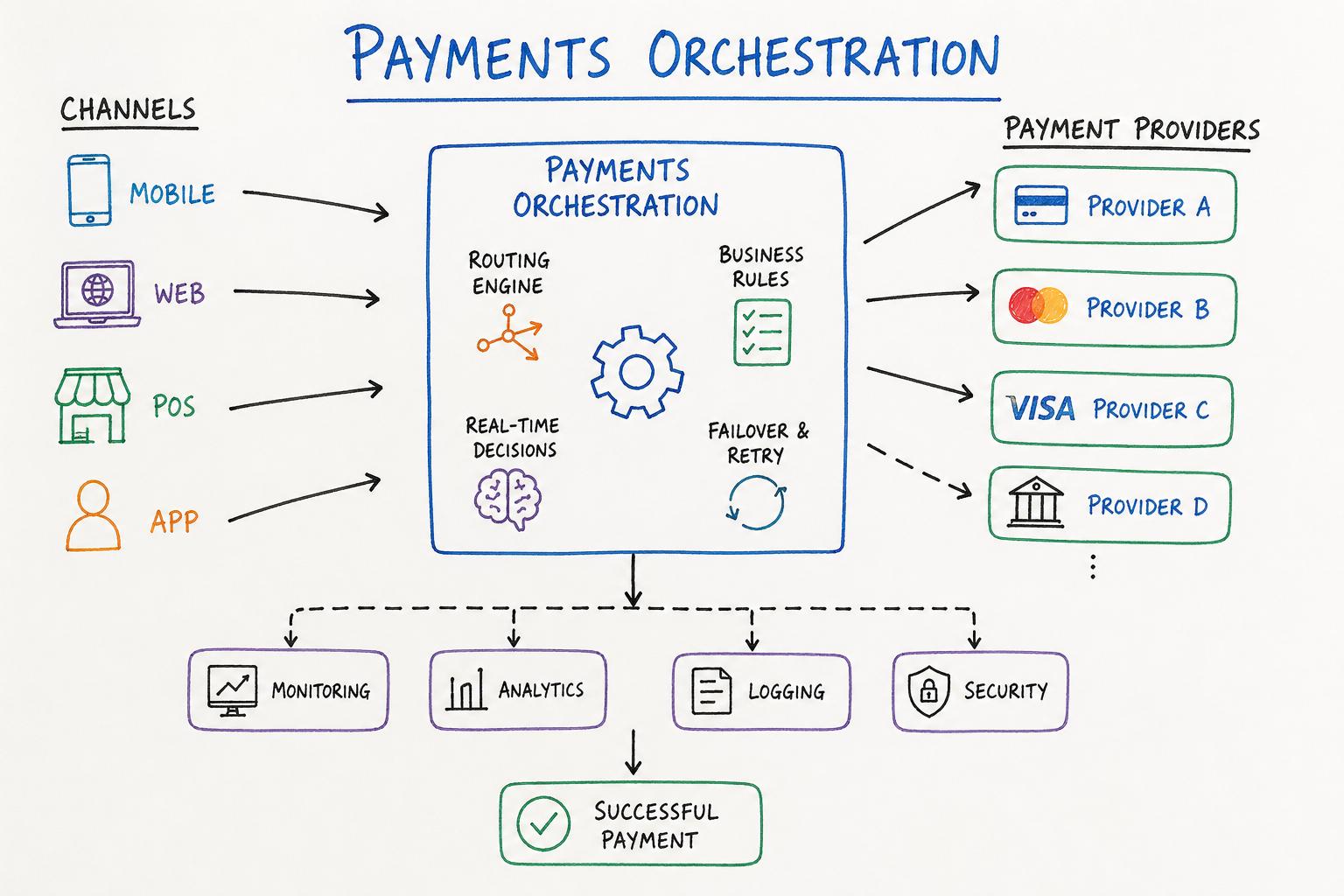
A payment orchestration platform simplifies installment management across several dimensions:
- Smart installment routing: Reads the incoming card's BIN to identify the issuing bank, then routes the transaction to that bank's virtual POS — automatically maximising the on-us advantage and campaign eligibility.
- Centralised campaign management: Which bank is actively offering which installment option for which MCC is managed from a single dashboard, eliminating bank-by-bank tracking.
- Installment cascading: If an installment transaction is declined on one channel, the system automatically retries on an alternative channel capable of offering the same installment terms.
- Single API: Instead of five separate bank integrations, the merchant connects to the entire bank network via one API. Adding a new bank requires no additional development on the merchant side.
How Many Installments Should You Offer?
The maximum installment count depends on BDDK restrictions and the acquirer bank agreement. In unrestricted categories, banks typically offer up to 12 instalments — sometimes more. However, a high instalment count is not always optimal: as the count rises, the bank's financing cost increases, which may be reflected in the merchant's discount rate. Defining the right instalment strategy based on your target customer profile and average basket value is recommended.
Conclusion
In Turkey, installments are not an optional enhancement — they are a direct conversion driver. Managing them correctly requires command of BDDK regulations, on-us routing logic, multi-bank integration, and campaign tracking simultaneously. Treps resolves this complexity through a single API and centralised management dashboard, integrated with all major Turkish banks.
Related reading: Smart Routing, Multi-Bank Integration, and Payment Approval Rate.
Tags
- Installment Payment
- Taksit
- Turkey Payment
- BDDK
- On-Us Transaction
- Payment Orchestration
- Credit Card Installment
- MCC Code
- Bank Campaign
- Virtual POS Turkey