
What Are Payment Systems? PSP, Payment Gateway and Orchestration Explained
Payment gateway, PSP or payment orchestration — what does your business actually need? A complete guide to payment infrastructure concepts and Turkey'...
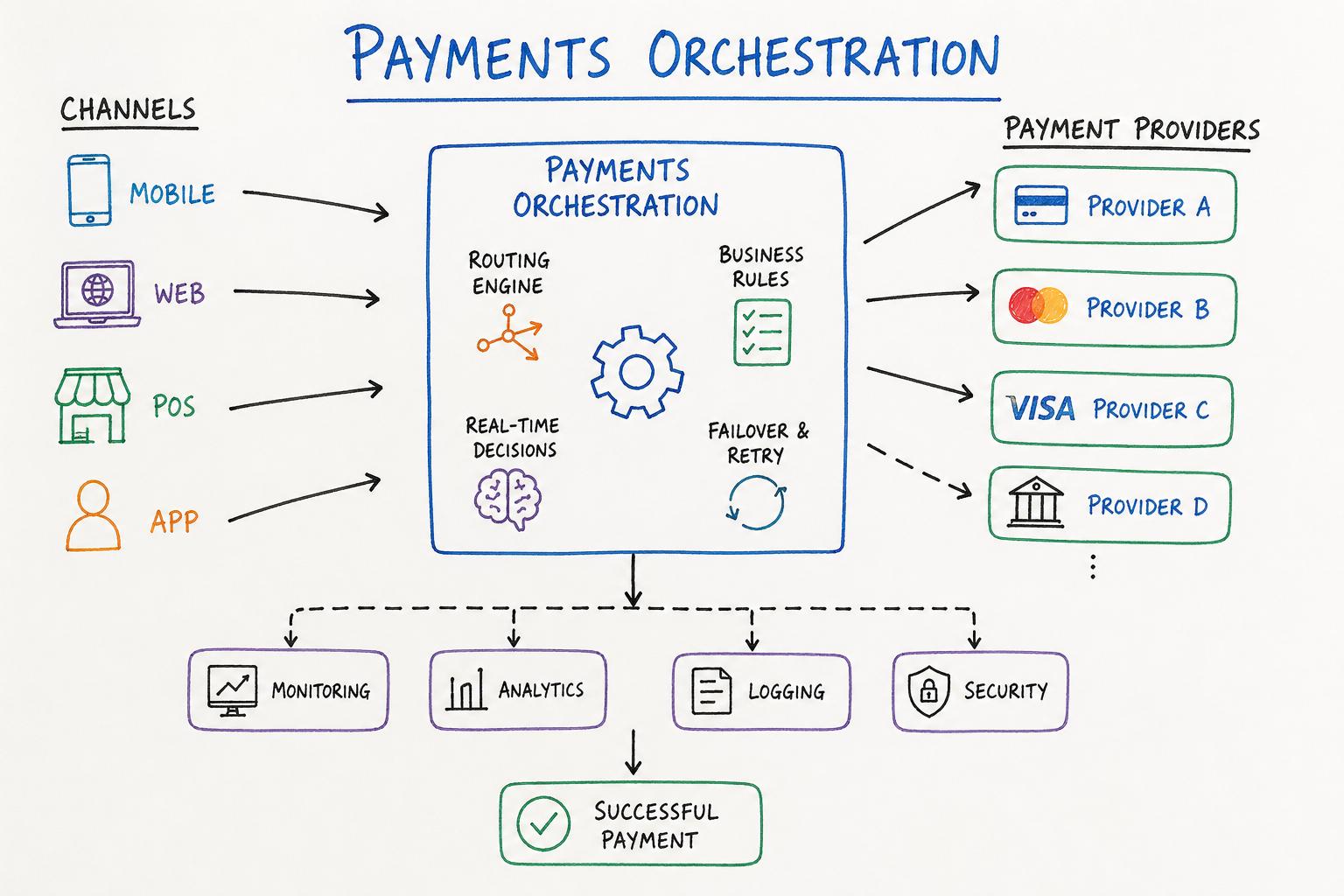
Read More →Each bank integration comes with its own API documentation, test environment, and maintenance overhead. A payment orchestration platform consolidates all bank connections under a single API — eliminating months of integration work.

For an e-commerce business operating in Turkey, offering installment campaigns is practically mandatory. To take advantage of different banks' installment options, you need to make virtual POS agreements with multiple banks and develop separate integrations for each one. Integrating with 5-10 banks turns into a project that occupies your team for months. The solution that eliminates this burden: managing multiple banks through a single API.
Every bank integration brings its own API documentation, test environment, certification process, and maintenance overhead. Working with 10 banks means:
Payment orchestration platforms keep all bank integrations in-house and offer the business a single standardized API. The business integrates once; all banks become accessible through this single connection.
You can explore Treps solutions for multi-bank management infrastructure.
For virtual POS, payment orchestration and integration needs, let our expert team guide you to the best solution.
Payment gateway, PSP or payment orchestration — what does your business actually need? A complete guide to payment infrastructure concepts and Turkey'...
Read More →
Payment orchestration is the technology layer that enables centralized management of multiple banks and payment service providers through a single pla...
Read More →
Which payment infrastructure should you choose to accept online payments in Turkey? We reviewed payment orchestration platforms such as Treps, Craftga...
Read More →