
What Is Payment Approval Rate? How to Improve It
Payment approval rate is one of the metrics with the most direct impact on a business's revenue. Even a 1% increase can mean millions in additional re...
Read More →Payment cascading automatically reroutes a transaction to an alternative channel when the primary one fails. Research shows 20-30% of failed transactions complete successfully on a second attempt. Here's how the mechanism works.
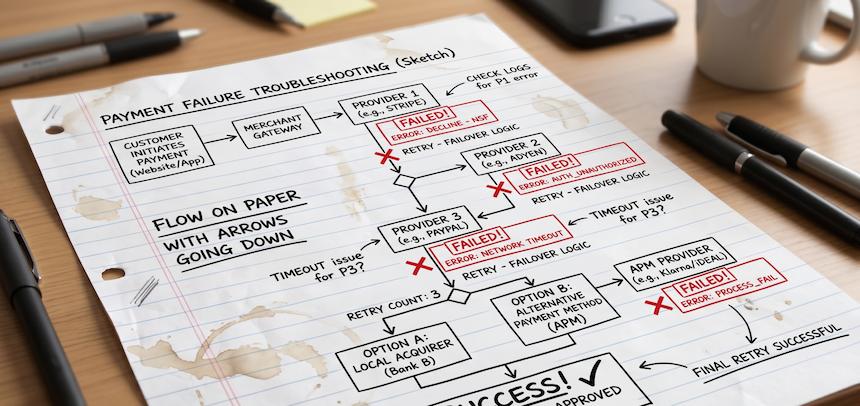
When a customer clicks the payment button on an e-commerce site, many things can go wrong behind the scenes: the bank's instant service may be overloaded, a card limit may be exceeded, or the bank may decline the transaction due to security rules. Instead of showing the customer an error screen in these scenarios, it's possible to silently retry the transaction through a different channel. This mechanism is called cascading.
Cascading is the mechanism by which, when a payment transaction fails on the primary channel, the system automatically moves to the next pre-defined channel and retries the transaction. The customer doesn't even notice this process; the payment is completed within a few seconds.
Most payment failures are not permanent. Research shows that 20-30% of declined transactions complete successfully when retried on a different channel. Without a cascading mechanism, this revenue is permanently lost.
Note: Cascading is not applied for hard decline situations (stolen card, insufficient funds, permanent security block), as retrying on a different channel won't change the outcome.
Cascading is powerful on its own, but becomes much more effective when combined with the payment orchestration platform's smart routing. First routing to the best channel (smart routing), then automatically backing up on failure (cascading), maximizes payment approval rates.
For virtual POS, payment orchestration and integration needs, let our expert team guide you to the best solution.
Payment approval rate is one of the metrics with the most direct impact on a business's revenue. Even a 1% increase can mean millions in additional re...
Read More →
Smart payment routing automatically selects the best payment channel for each transaction. Through on-us routing, cost optimization, and real-time cha...
Read More →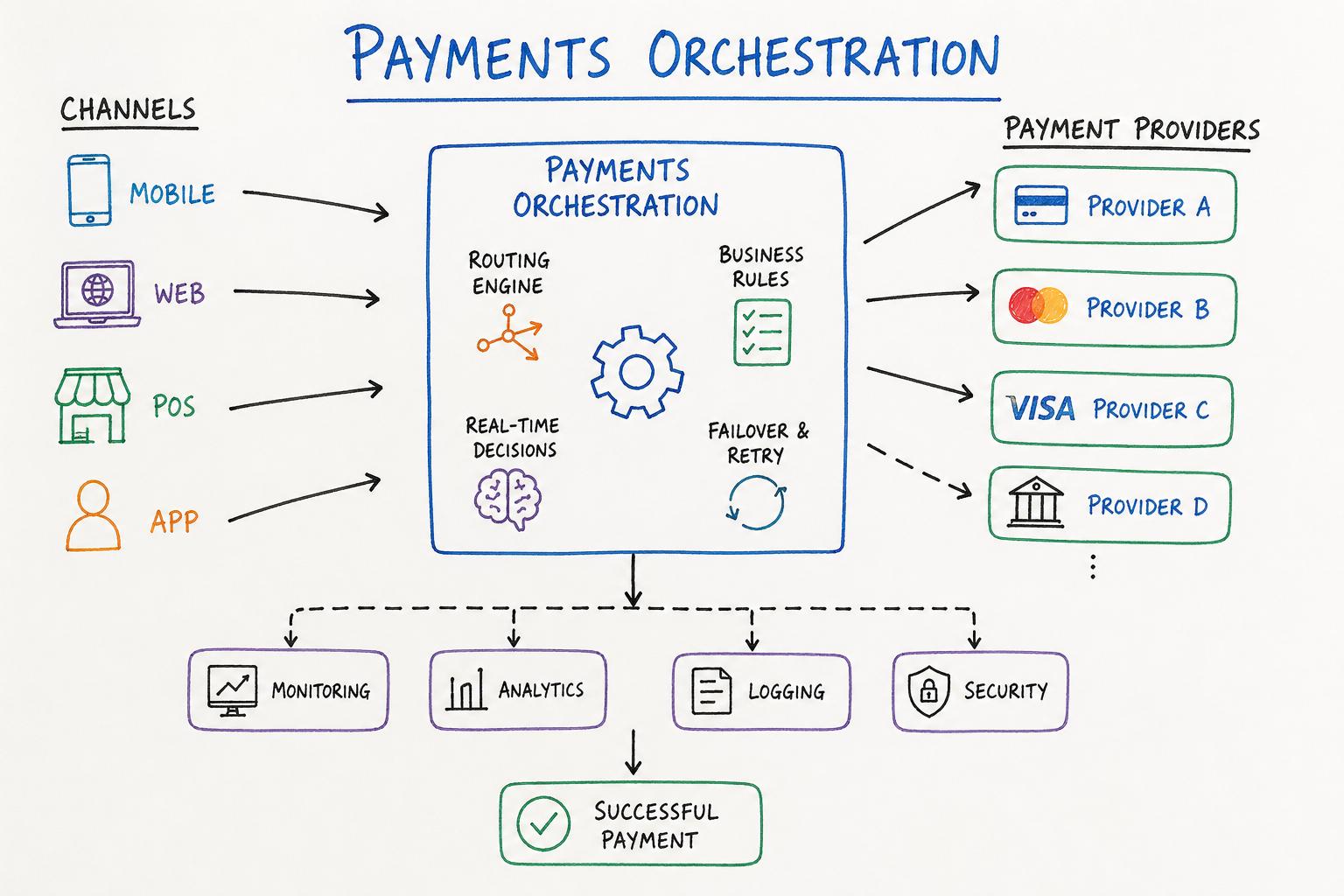
Payment orchestration is the technology layer that enables centralized management of multiple banks and payment service providers through a single pla...
Read More →