


How Does AI-Powered Fraud Detection Work in Payment Systems?
Rule-based fraud systems are no longer enough. We explain how machine learning models use device fingerprinting, behavioural biometrics, and real-time...
Read More →When a cardholder disputes a transaction with their bank, merchants face both financial and operational risk. We break down how the chargeback process works, the main reason code categories, the representment process, and practical strategies to reduce disputes.
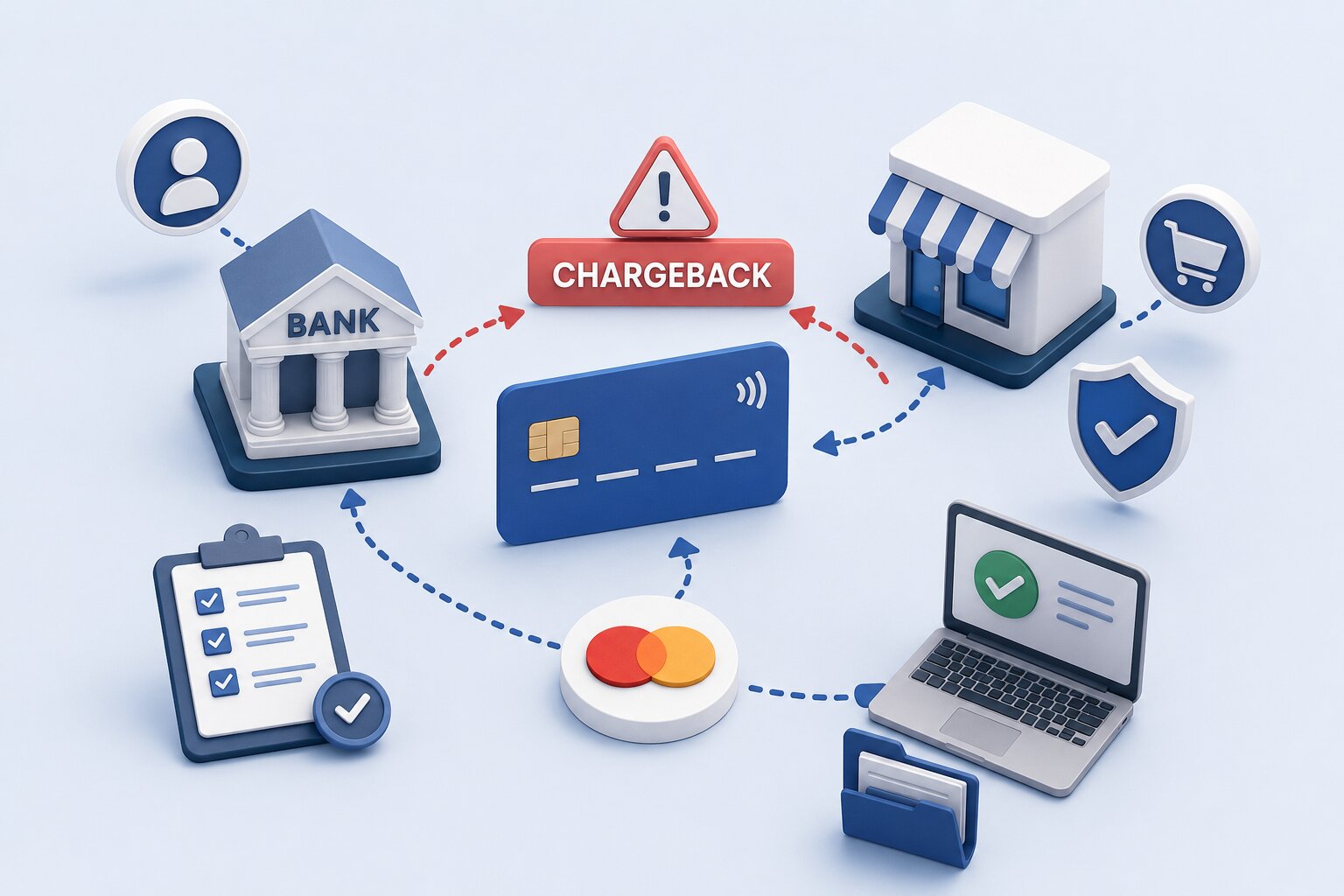
When a cardholder sees a transaction on their statement that they don't recognise, believe to be incorrect, or feel they never received the goods or service for, they raise the issue with their own bank (the issuer) — not with the merchant directly. When the bank reviews the claim and reverses the transaction, this process is known as a chargeback. For merchants, a chargeback is never just a lost sale: it can mean additional penalty fees, increased scrutiny under network monitoring programmes, and — beyond a certain threshold — termination of the merchant's banking relationship altogether.
Transactions authenticated through EMV 3D Secure benefit from a liability shift: fraud-related chargeback responsibility largely moves to the issuing bank. Merchants with high 3D Secure coverage are significantly better protected against fraud-reason-code disputes.
Visa and Mastercard enrol merchants who exceed a defined chargeback-to-volume ratio into monitoring programmes (Visa Dispute Monitoring Program, Mastercard Excessive Chargeback Program). Merchants in these programmes face additional review fees, closer scrutiny from their acquirer, and — if the threshold remains exceeded — potential termination of their merchant agreement.
When responding to a dispute, merchants submit the evidence available to them: shipment tracking numbers, the cardholder's IP address and device data, order confirmation emails, billing address matches, AVS/CVV results, and 3D Secure authentication records. Whether this evidence is systematically captured and stored at the time of the transaction directly determines the success rate of representment.
For merchants working with multiple banks and PSPs, chargeback tracking quickly becomes fragmented — different notification formats, different deadlines, different dashboards per channel. A payment orchestration platform consolidates disputes from every channel into a single dashboard, automatically links transaction evidence (3DS records, transaction history), and makes it possible to monitor the balance between approval rate and chargeback ratio from one place.
Chargeback management is not just about recovering a lost transaction — it directly affects a merchant's banking relationship and long-term payment acceptance capacity. Diligent reason-code tracking, a strong evidence-collection process, and broad 3D Secure coverage together keep chargeback ratios under control. Treps's payment orchestration infrastructure lets you manage disputes from multiple banks centrally.
Related reading: EMV 3D Secure and Payment Approval Rate.
For virtual POS, payment orchestration and integration needs, let our expert team guide you to the best solution.
Rule-based fraud systems are no longer enough. We explain how machine learning models use device fingerprinting, behavioural biometrics, and real-time...
Read More →
EMV 3D Secure (3DS 2.0) has been one of the most comprehensive protocols developed to secure card payments since 2016. Yet many PSPs, banks and mercha...
Read More →
With the advancement of technology, the way we pay for goods and services has changed significantly. Pay by Link Payment allows customers to make paym...
Read More →