
What Are Payment Systems? PSP, Payment Gateway and Orchestration Explained
Payment gateway, PSP or payment orchestration — what does your business actually need? A complete guide to payment infrastructure concepts and Turkey'...
Read More →Payment orchestration or payment gateway — these two concepts are often confused, but their responsibilities and the value they deliver are fundamentally different. We explain the key differences to help you understand which one your business needs.
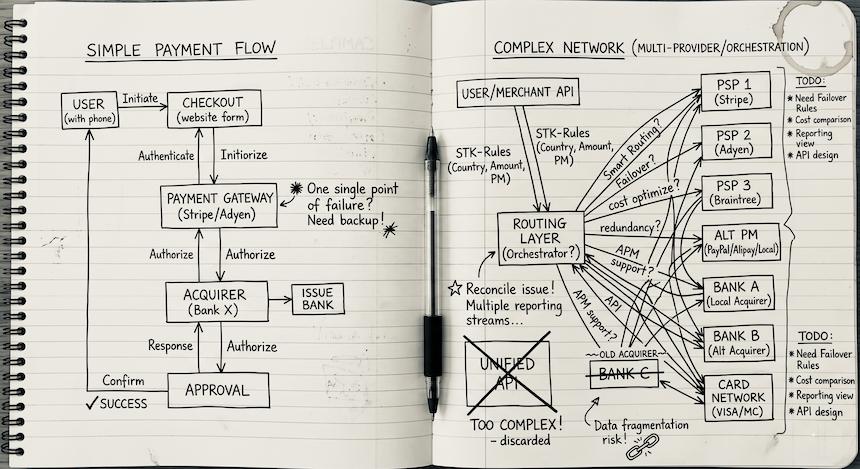
'Payment orchestration or payment gateway?' is a question that frequently confuses businesses when building payment infrastructure. Both concepts exist within the payment process, but their responsibilities and the value they deliver are fundamentally different.
A payment gateway is the technical bridge that securely transmits a payment transaction from the cardholder to the merchant, and from the merchant to the acquirer bank. It encrypts card data, forwards it to the relevant bank, receives the approval or decline response, and notifies the merchant. It works with a single bank or PSP and contains no decision-making mechanism on its own. For more detail, see: Payment Gateway and the On-Us/Not On-Us Concept.
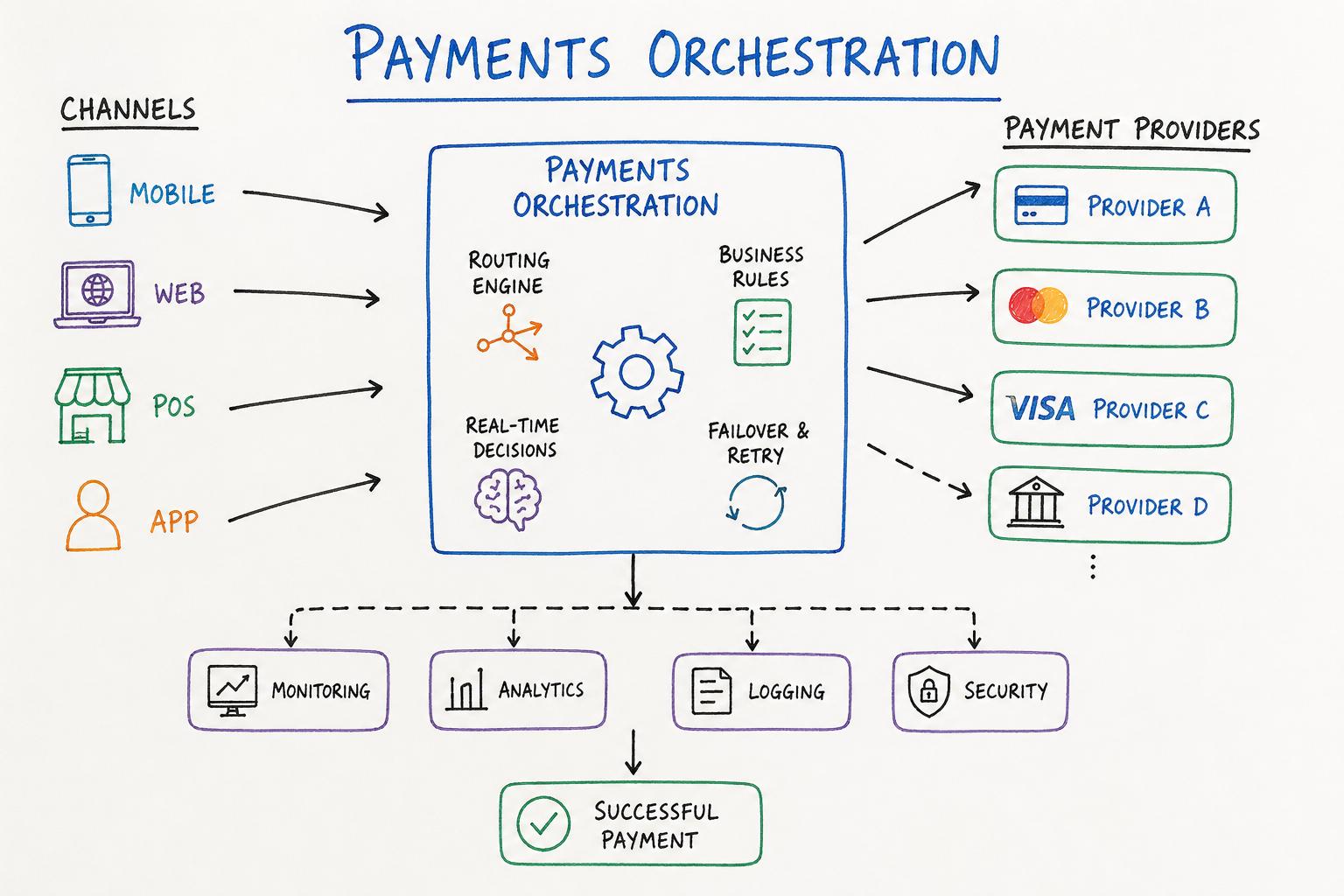
A payment orchestration platform is the upper layer that manages multiple payment gateways and PSPs. It answers the questions: 'Which bank should this transaction go to? What happens if it fails? How should it be reported?' It doesn't process payments itself; it operates as a coordination layer above existing gateways.
| Feature | Payment Gateway | Payment Orchestration |
|---|---|---|
| Connections | Single bank/PSP | Multiple banks/PSPs |
| Smart routing | None | Yes (static + dynamic) |
| Cascading | None | Yes |
| Centralized reporting | None | Yes |
| Integration complexity | Grows with each bank | Single API stays constant |
If your business works with a single bank and you don't plan to change that, a payment gateway is sufficient. But if you want to offer installment campaigns with multiple banks, optimize payment success rates, or have new bank integrations in your growth plans, transitioning to a payment orchestration platform is the right move.
For virtual POS, payment orchestration and integration needs, let our expert team guide you to the best solution.
Payment gateway, PSP or payment orchestration — what does your business actually need? A complete guide to payment infrastructure concepts and Turkey'...
Read More →
Payment orchestration is the technology layer that enables centralized management of multiple banks and payment service providers through a single pla...
Read More →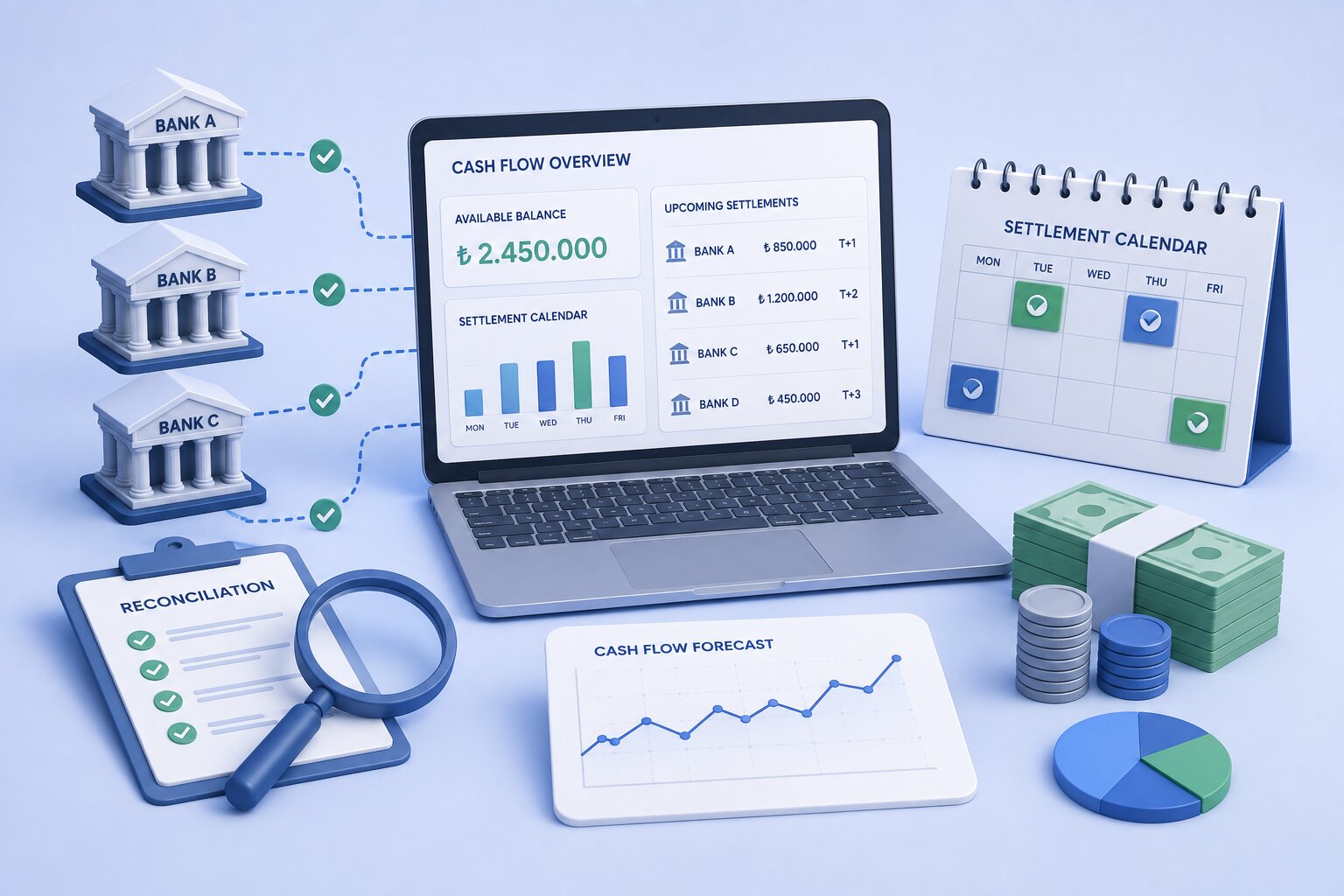
The gap between when a sale is made and when the money actually lands in your account shapes cash flow planning directly. How do you keep visibility a...
Read More →