
Payment Orchestration vs Payment Gateway: Key Differences
Payment orchestration or payment gateway — these two concepts are often confused, but their responsibilities and the value they deliver are fundamenta...
Read More →Payment gateway, PSP or payment orchestration — what does your business actually need? A complete guide to payment infrastructure concepts and Turkey's payment ecosystem.
As digital commerce grows, payment infrastructure has become a strategic asset rather than a commodity. Whether you run an e-commerce site, a SaaS product or a platform business, understanding the difference between a payment gateway, a PSP and payment orchestration helps you make the right infrastructure decision.
A payment system is the complete infrastructure that enables the secure, fast transfer of funds between buyer and seller. Every card transaction involves four key players:
Card networks (Visa, Mastercard) manage the messaging between acquirer and issuer.
A payment gateway is the technology layer that encrypts card data and routes it to the acquirer bank. It's the digital equivalent of a physical POS terminal. Its core functions:
A PSP enables merchants to connect to multiple banks or card networks through a single integration, handling both the gateway and acquiring bank relationships. Examples in Turkey: iyzico, PayTR, Paratika.
Advantages: Fast integration, low startup cost, technical infrastructure managed by PSP.
Limitations: Merchant cannot control which bank processes each transaction. No dynamic routing across multiple banks. Flexibility decreases as transaction volume grows.
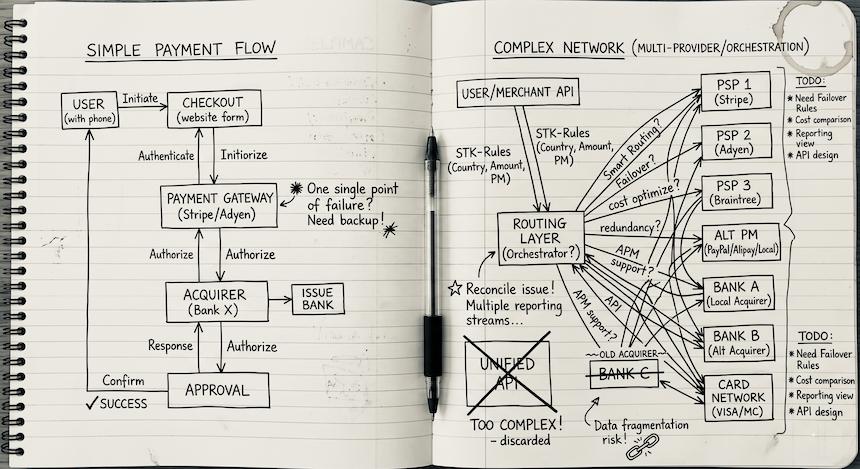
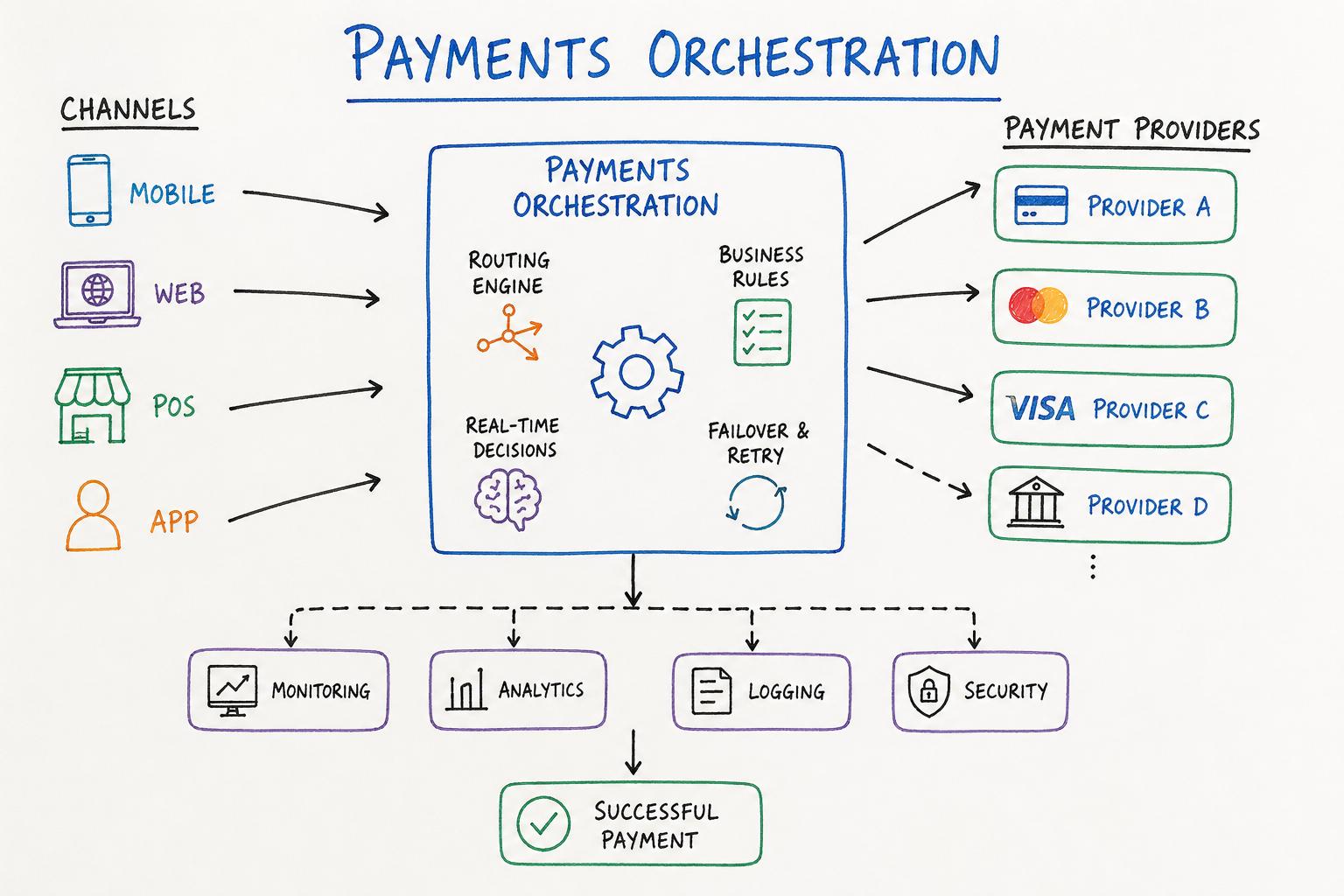
Payment orchestration is the technology layer that centrally manages multiple payment gateways, banks and payment methods through a single platform. It goes beyond the PSP model — the business defines rules for which transaction goes to which channel.
Core orchestration capabilities:
Payment system infrastructure — gateway, PSP and orchestration — consists of interconnected layers. Choosing the right model for your scale and needs directly impacts payment success rates and long-term costs.
Explore Treps payment orchestration solutions at our solutions page.
For virtual POS, payment orchestration and integration needs, let our expert team guide you to the best solution.
Payment orchestration or payment gateway — these two concepts are often confused, but their responsibilities and the value they deliver are fundamenta...
Read More →
iyzico, PayTR, Craftgate or Treps — what's the right payment infrastructure for your business? We compare the PSP and payment orchestration models ope...
Read More →
Each bank integration comes with its own API documentation, test environment, and maintenance overhead. A payment orchestration platform consolidates ...
Read More →