

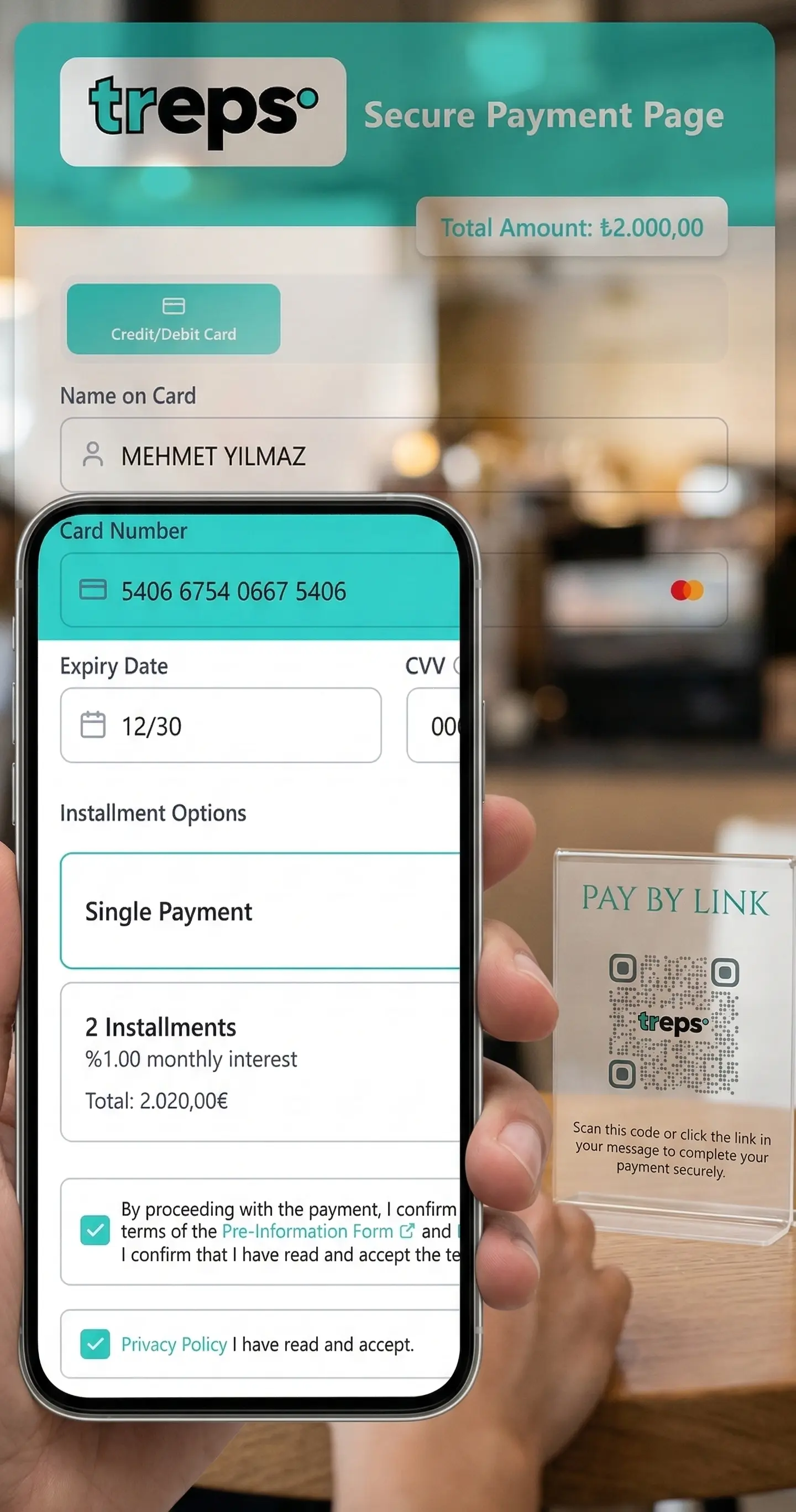
What Is Mail Order Payment? MOTO Payment and Payment Link Guide
Mail order (MOTO) payments for call centres and B2B sales — how they work, when to use payment links instead, and how to stay PCI DSS compliant withou...
Read More →How does secure card storage work? Channel-independent tokenisation, PCI DSS scope reduction and one-click checkout benefits for e-commerce, subscription and marketplace businesses.
Returning customers shouldn't have to re-enter their card details on every purchase. Secure card storage — tokenisation — lets customers save their card once and pay in a single click on every subsequent visit. It improves conversion, reduces PCI DSS scope, and — with channel-independent storage — eliminates vendor lock-in.
Card storage means holding a customer's card details for future use. But the raw card number is never stored — instead it's replaced by a meaningless token. The real card data lives only in a PCI DSS Level 1 certified vault; the merchant and application layers see only the token.
For the technical deep-dive: What Is Card Tokenisation?
On the first purchase, the customer enters their card and opts to save it. The payment system tokenises the card and associates the token with the customer profile. On every subsequent purchase, the customer selects their saved card and pays in a single click — no re-entry required.
In the traditional PSP model, the card is stored in that PSP's vault. If you switch payment channels — say from one provider to a bank — you have to collect card details from every customer again. Treps's card storage is channel-independent:
One of the largest costs of PCI DSS compliance is scope breadth. Systems that never see raw card data fall outside PCI scope. Merchants using Treps tokenisation never handle raw card numbers, meaningfully narrowing their PCI DSS scope and reducing audit costs.
Secure card storage and one-click payment improve conversion while reducing PCI DSS burden. Treps's channel-independent tokenisation delivers a consistent, fast checkout experience regardless of which payment channel processes the transaction.
Learn more at Treps Card Storage or contact us.
For virtual POS, payment orchestration and integration needs, let our expert team guide you to the best solution.
Mail order (MOTO) payments for call centres and B2B sales — how they work, when to use payment links instead, and how to stay PCI DSS compliant withou...
Read More →
Payment system integrations are unexpectedly complex for most engineering teams. Different bank protocols, PCI DSS requirements, and timeout managemen...
Read More →
Card tokenization — the technology powering Apple Pay and Google Pay — is fundamentally transforming payment security by replacing real card numbers w...
Read More →